TikTok as a Search Engine: The Complete Brand Guide for 2025
TikTok is no longer just an entertainment platform. It is a search engine, discovery engine, and brand-building channel that Gen Z, and increasingly Millennial, audiences use as a primary information source. Understanding how TikTok functions as a search tool and how to optimize for its algorithm is now a core competency for any brand targeting audiences under 40.
Why Gen Z Searches on TikTok Instead of Google
According to Adobe's consumer research, over 64% of Gen Z Americans use TikTok as a search engine, with nearly 10% preferring it over Google for specific query types. The top categories include:
Restaurant and local food recommendations: 19%
Recipes and cooking how-tos: 36%
Product reviews and brand comparisons
Health, wellness, and fitness guidance
Career advice and professional development
The reasons are structural. TikTok delivers video-first, peer-validated answers. For an audience that grew up with YouTube tutorials and Instagram aesthetics, Google's text-heavy results feel abstract compared to seeing a real person demonstrate a solution on camera.
How TikTok's Search Algorithm Works
TikTok's search ranking differs from traditional SEO in important ways:
Understanding these differences is the starting point for a TikTok SEO strategy that actually improves search visibility.
TikTok SEO: 5 Ways to Optimize Your Content for Search Discovery
1. Use Keywords in Captions and On-Screen Text
TikTok's algorithm reads both the spoken audio and the visible text in your videos. Place your primary keyword in the first line of your caption and include it as on-screen text within the first three seconds of the video, the period when watch time decisions are made.
2. Match Content to Specific Search Intent
Each TikTok should answer one question clearly and completely. The more specific the query your content answers, the higher the probability of surfacing for that search. "Best CRM for boutique marketing agencies" outperforms "CRM tools" as a target query because it matches intent precisely.
3. Use Hashtags Strategically, Not Maximally
Three to five relevant hashtags outperform fifteen generic ones. Combine a broad category hashtag with two or three niche-specific ones that reflect the actual topic of your content. Hashtag stuffing dilutes relevance signals.
4. Build Creator Authority Through Consistency
TikTok's algorithm favors accounts with consistent engagement history in a defined content niche. Posting a minimum of two to three times per week within a clearly defined topic area builds the account authority that amplifies search visibility over time. Sporadic posting in multiple unrelated categories prevents authority accumulation.
5. Leverage the Organic-Paid Synergy
According to TikTok's own Return on Creative research, when users encounter a brand's organic content on their For You Page, subsequent paid ads from that brand perform measurably better. 48% of users reported that an ad felt non-intrusive after previously seeing organic content from the same brand. Organic and paid are not separate channels on TikTok, they are a compounding system.
TikTok Brand Strategy: 7 Principles for 2025
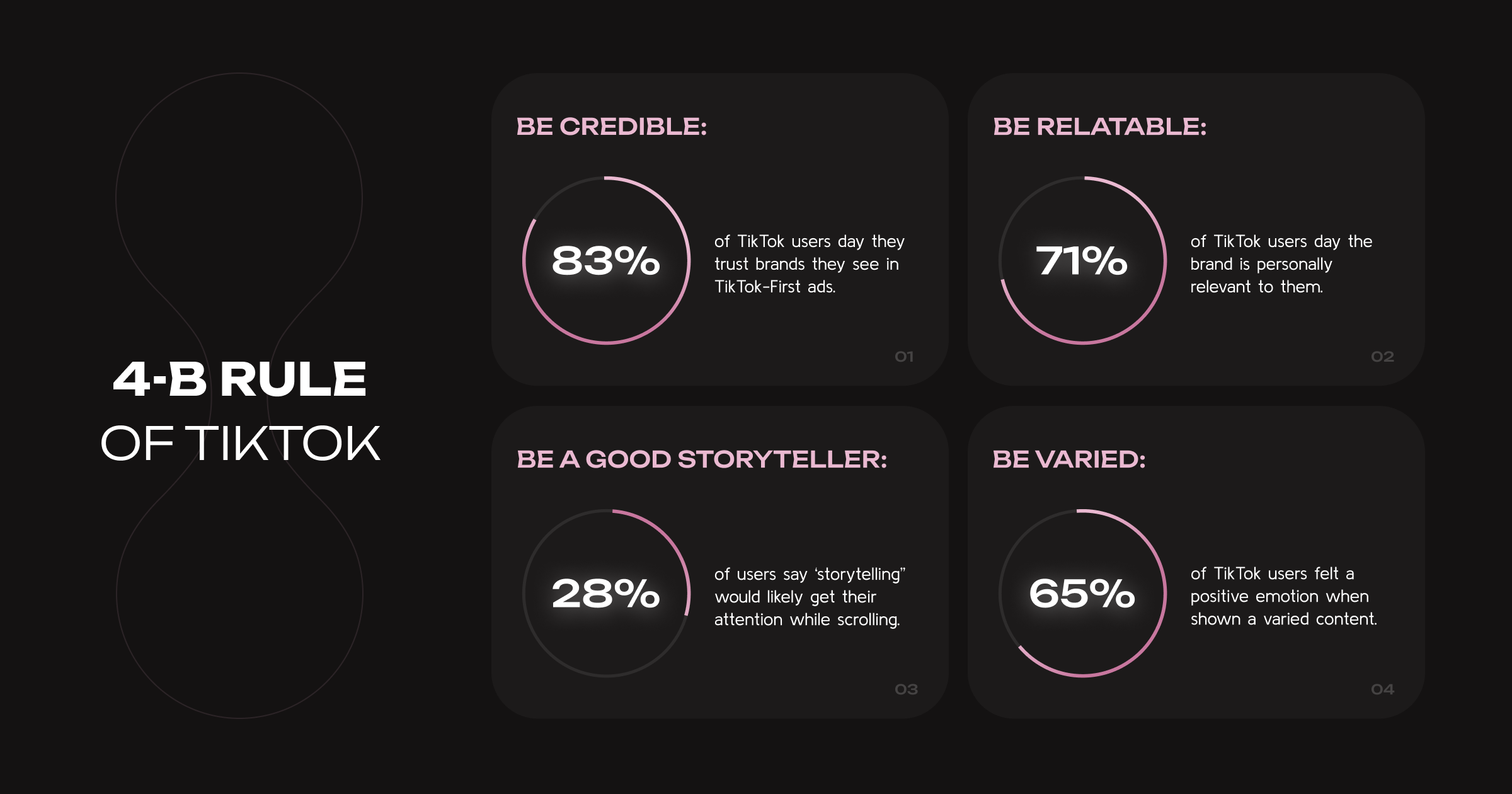
Lead with empathy: address what your audience actually cares about, not what you want to promote
Prioritize resonance: create content that triggers an emotional or intellectual response worth sharing
Diversify formats: mix educational, behind-the-scenes, trend-adapted, and product-focused content
Combine organic and paid: each amplifies the other; neither performs as well in isolation
Create TikTok-native content: repurposed assets from other platforms underperform content made specifically for TikTok
Use TikTok's creator tools: Spark Ads, Creator Marketplace, and Creative Assistant accelerate reach and production quality
Engage authentically: comment, reply, participate in trends, the algorithm rewards community participation, not passive broadcasting
The Business Case for TikTok in 2025
Over 1.5 billion active users globally across all age groups
More than half of small business owners report using TikTok to promote their businesses
1 in 4 small business owners leverage TikTok influencers for product sales or promotion (Adobe)
Only 26% of marketers currently run TikTok campaigns — competitive space remains available (Sprout Social, 2024)
The Risks Brands Must Acknowledge
TikTok operates under ByteDance, a Chinese parent company that has faced regulatory scrutiny in the US, EU, and other markets. Brands building significant reliance on TikTok should:
Maintain an active presence on at least one alternative short-form platform, Instagram Reels or YouTube Shorts
Build an owned audience channel (email list, website) that is not platform-dependent
Monitor regulatory developments in their primary markets on a quarterly basis
The opportunity on TikTok is real. So is the platform risk. The correct response is not
avoidance, it is strategic participation with contingency planning.
TikTok's emergence as a search engine is not a trend, it is a structural shift in how younger audiences
discover brands, products, and solutions. The brands that invest in TikTok presence now, strategically,
authentically, and with a contingency plan, are building a compounding advantage as the audience
grows and the platform's search capabilities mature.
Next Article:

- © 2026 Brandualist Inc. · BRANDUALIST®
- Privacy Policy